| Quick Answer: A generator only earns its keep during outages; a home battery works every single day. Generators run on fuel, need maintenance, make noise, and carry serious carbon monoxide risks — while batteries switch over silently and automatically, recharge from solar through multi-day shutoffs, and cut your bill year-round by covering the 4–9 PM peak. Generators still hold an edge for very long outages without solar and for the lowest upfront cost. For most California homes under time-of-use rates, the battery is the stronger 2026 answer — and your utility bill will tell you by how much. |
For decades, backup power meant one thing: a generator in the side yard. Public Safety Power Shutoffs changed how often Californians need backup, and NEM 3.0 changed what backup hardware can do the other 360 days of the year. Here is the honest head-to-head — including the places a generator still wins.
How Each One Handles an Outage
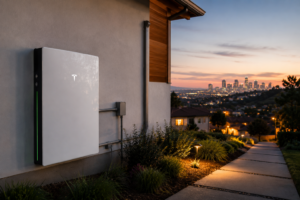
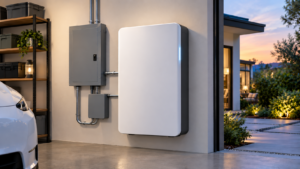
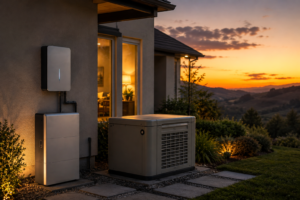
A battery system detects the grid dropping and islands the home automatically — the transition is near-instant and silent, and platforms like the Tesla Powerwall 3 even watch the weather and charge to full ahead of forecast storms, so you enter the outage topped up. A portable generator needs to be rolled out, fueled and started; a standby generator starts itself but with a gap, engine noise, and a fuel supply to think about. On pure outage experience, the battery is the appliance and the generator is the chore.
Safety: The Difference Nobody Should Skip
This is the sharpest contrast in the comparison. Gasoline generators produce carbon monoxide — the U.S. Consumer Product Safety Commission warns that a single portable generator can emit as much CO as hundreds of cars, must never be run in homes or garages, and should operate at least 20 feet from the house with exhaust pointed away. Generator CO poisoning kills dozens of Americans in a typical year, most often in the aftermath of storms and outages — exactly when people are tempted to run units too close to the house. A battery produces no exhaust, no fumes and no noise, and modern residential platforms are built to stringent safety standards and installed under permit by licensed contractors.
What They Cost You the Other 360 Days
A generator sits idle between outages — depreciating, demanding periodic maintenance and fuel rotation, and returning nothing. A battery goes to work daily: charging on cheap midday solar or off-peak grid power and discharging through the 35-to-62-cent evening peak, which under NEM 3.0 is precisely where California’s money leaks. That daily arbitrage — not the outage protection — is what gives solar-plus-battery systems their 7–11 year paybacks. Backup becomes something your bill-saving asset does on the side, rather than the only thing the hardware does at all.
Where a Generator Still Wins
Honesty requires the other column. A generator’s upfront cost is typically lower than a battery system’s. Its runtime is bounded by fuel supply rather than stored charge, which matters for very long outages at homes without solar to recharge a battery. And for rarely-occupied properties where daily bill savings never accrue, a generator’s buy-it-and-forget-it profile can genuinely fit better. If that describes your situation, that is the recommendation you should hear — a specialist who only ever answers “battery” is selling, not advising.
The Hybrid Question and How to Decide
Some households pair a battery for daily savings and seamless short-outage coverage with a generator held in reserve for worst-case events — a belt-and-suspenders approach for medical needs or severe fire-country risk. For most homes, though, the decision resolves from three facts on your utility bill: your peak rates, your evening usage, and your outage exposure. High time-of-use rates plus solar on the roof make the battery case overwhelming; no solar, rare outages and low rates narrow the gap. Solari Storage’s standing offer applies either way — send a recent bill, get the real numbers for your home, including if the numbers say don’t buy.
Ownership and Daily Life: Fuel, Noise and Maintenance
The ownership experiences barely resemble each other. A generator is a small engine: it wants fresh fuel on hand (and gasoline goes stale), periodic oil and filter service, monthly exercise runs to stay reliable, and a plan for storing fuel safely. When it runs, the whole street knows — engine noise is constant for as long as the outage lasts, day and night. Standby units automate the starting but not the servicing, the fuel bill, or the sound.
A battery, by contrast, is a sealed appliance on a wall. There is no fuel to buy, rotate or store; no oil changes; no exercise schedule; no noise beyond a hum you have to stand next to to notice. Its software updates itself, its app shows you exactly what it is doing, and its maintenance burden on the homeowner rounds to zero. For households that have actually lived through a week of generator ownership — the 2 AM refueling run in a windstorm is a rite of passage — this quality-of-life gap ends up mattering as much as the economics. Backup you never have to think about is backup that actually works the day you are out of town and someone else is home.
Frequently Asked Questions
Is a home battery better than a generator in California?
For most homes on time-of-use rates — especially with solar — yes: automatic backup plus daily bill savings versus outage-only value. Generators keep an edge on upfront cost and unlimited-fuel runtime for homes without solar.
Can a battery last through a multi-day PSPS shutoff?
Paired with solar, yes — the panels recharge the battery each day, letting well-designed systems cycle through multi-day events. Without solar, stored capacity sets the limit.
Are generators dangerous?
They carry a real carbon monoxide risk — the CPSC requires outdoor-only operation at least 20 feet from the home. Batteries produce no exhaust and switch over silently.
Do batteries work during a blackout like a generator does?
Yes, and faster — the system islands automatically the moment the grid drops, with no fueling, starting or transfer switch routine.
Should I have both a battery and a generator?
A minority of households with extended-outage exposure or critical medical loads pair them. For most, a correctly sized solar-plus-battery system covers realistic scenarios and pays for itself between them.
Ready for a straight answer? Send Solari Storage a recent utility bill and find out exactly what a battery would do for your home — including if the numbers say don’t buy. Contact Solari Storage for a free assessment.
Key Takeaways
- A generator only works during outages; a battery saves money every day by covering the 4–9 PM peak — then backs you up too.
- Batteries switch over silently and automatically; generators need fuel, maintenance and outdoor-only operation.
- Carbon monoxide is the decisive safety gap: CPSC warns one portable generator emits as much CO as hundreds of cars.
- Solar-paired batteries ride out multi-day PSPS events by recharging daily; fuel-fed generators keep the edge only where solar is absent.
- Your peak rates, evening usage and outage exposure — all on your bill — decide the comparison for your specific home.