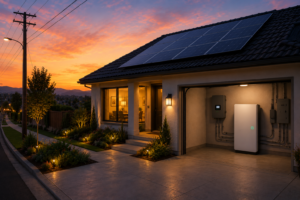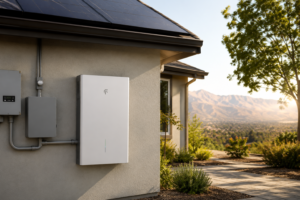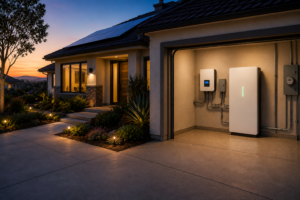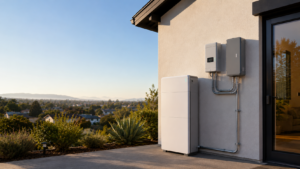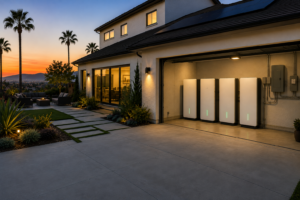
| Quick Answer: Yes — modern home battery platforms are built to expand, but how gracefully depends on the platform you start with. Lunar Energy scales in modules from 10 to 30 kWh, FranklinWH scales further than most residential systems, and Tesla’s Powerwall 3 supports additional units and dedicated expansion packs. The key is choosing an expandable platform on day one: adding capacity to a system designed for it is straightforward, while outgrowing a dead-end system means starting over. |
California homes are electrifying fast — an EV this year, a heat pump next, maybe an ADU after that — and every one of those additions raises the evening load a battery has to carry. So the question is not just what your home needs today, but whether today’s battery becomes tomorrow’s bottleneck. The honest answer: expandability is real, it varies meaningfully by platform, and it should be a deliberate part of the purchase decision rather than an afterthought.
Why Would a Correctly Sized Battery Need to Grow?
Because households change faster than hardware wears out. An electric vehicle adds meaningful daily consumption; electrifying heat or water moves major loads onto the panel; a new family member or a home office shifts the evening curve upward. A battery sized honestly to your current bill can be exactly right today and undersized in three years — which is an argument for expandable platforms, not for over-buying capacity you may never use.
How Does Each Platform Handle Expansion?
This is one of the sharpest real differences among the four platforms:
- Lunar Energy is modular by design — capacity spans 10 to 30 kWh in increments, so the system gets sized to your actual evening consumption today and expanded later if you add an EV or electrify your heating. Growth is the platform’s core premise.
- FranklinWH scales further than most residential platforms, so larger homes and higher-consumption households can add capacity without switching to a different system — a real advantage for properties that expect to keep growing.
- Tesla Powerwall 3 expands with additional Powerwall units and dedicated expansion packs; Tesla’s published datasheet documents support for multiple units and expansion modules on a single system.
- SolarEdge expansion is planned within its own ecosystem, which suits homes already committed to SolarEdge equipment.
Is It Cheaper to Buy Big Now or Expand Later?
Neither, universally — which is why the question deserves your actual numbers. Buying capacity you will not use for years ties up money in idle hardware; expanding later adds a second project’s worth of coordination. The disciplined approach is to size to today’s real evening load, choose a platform whose expansion path matches your realistic plans, and let tomorrow’s loads pay for tomorrow’s capacity. What that rules out is paying extra today for speculative future usage a modular platform could absorb when — if — it arrives.
What Should You Tell Your Designer About Future Plans?
Everything on the two-to-five-year horizon: an EV on order, a heat pump quote in a drawer, a kitchen going electric, an ADU sketch. A designer working from your utility bill sees your present with precision; only you can supply the future. Together, those set both the right initial size and the right platform — and if your plans genuinely do not require what a bigger system sells, an honest specialist says so. That is the standing promise in Solari Storage’s home battery FAQ: the deciding factors are your peak load, your backup needs, your equipment and your space — not the sales sheet.
Timing an expansion also has a practical rhythm to it. The natural trigger is visible on your utility bill: when peak-hour purchases start creeping back up on normal evenings — the sign your battery is emptying before 9 PM — your consumption has outgrown your capacity. Watching for that signal beats guessing, and it means the expansion happens when the numbers justify it rather than when a sales call does. Because the paperwork side of an addition — approvals and utility coordination — is managed the same way the original project’s was, the homeowner’s part of growing a system is mostly just noticing the bill and sending it in.
Do You Need More Panels When You Add More Battery?
Usually not — and it is worth being direct about this, because “while we’re at it” solar upsells are common in expansion conversations. Most California homes with existing solar produce more midday energy than they consume at midday; under NEM 3.0 the surplus is currently being exported for 5 to 8 cents. Added battery capacity typically just captures more of that surplus rather than demanding new generation. More panels only enter the picture when your total consumption genuinely outgrows your array’s production — a fact your utility bill states plainly — and that is a threshold most households are nowhere near even after an EV arrives.
The battery-first, solar-second sequencing is the honest default for exactly this reason: storage fixes the timing mismatch that is costing you money today, while additional generation only pays when there is unmet daytime demand for it to serve. An expansion quote that bundles panels without pointing to the production-versus-consumption line on your bill deserves the same skepticism as any other unrequested add-on. Keep the project simpler, faster and cheaper: expand the storage that your existing surplus can fill, and add generation if — and only if — the numbers ever say so.
Frequently Asked Questions
Can I add a second battery to an existing system?
On expandable platforms, yes — Lunar adds modules, FranklinWH adds units at scale, and Powerwall 3 supports additional units and expansion packs. The platform choice on day one determines how smooth this is.
Will adding an EV overwhelm my current battery?
It raises household consumption meaningfully, but smart designs charge the EV off-peak from the grid while the battery covers the home’s evening peak — and modular platforms absorb the growth when you want backup headroom too.
Do expansions require new permits?
Capacity additions go through their own approval and interconnection steps — managed as part of the project, the same way the original installation’s permits and utility paperwork were.
Should I oversize my first battery just in case?
Usually not. Size to your real evening load today on a platform that can grow — idle capacity is money spent on electricity you are not yet using.
Which platform is best for a home that will keep growing?
Lunar’s modular sizing and FranklinWH’s scale headroom are the growth-first choices; the right one depends on your existing equipment and loads, which is a design question from your bill.
Ready for a straight answer? Send Solari Storage a recent utility bill and find out exactly what a battery would do for your home — including if the numbers say don’t buy. Contact Solari Storage for a free assessment.
Key Takeaways
- Modern platforms expand — but how gracefully varies, so expandability belongs in the day-one purchase decision.
- Lunar scales in modules (10–30 kWh), FranklinWH scales further than most, and Powerwall 3 adds units and expansion packs.
- Electrification — EVs, heat pumps, ADUs — is why correctly sized batteries still grow.
- Size to today’s real load on an expandable platform rather than paying now for speculative future usage.
- Tell your designer your two-to-five-year plans — the bill shows your present; only you can supply the future.