| Quick Answer: Yes — home battery systems installed to code by a licensed contractor are safe, and California applies some of the strictest siting, fire and electrical requirements in the country to residential energy storage. The risks that do exist are overwhelmingly associated with improper installation rather than with the batteries themselves. Solari Storage permits and inspects every install. Call (916) 507-1626 with any safety question. |
Battery safety is a reasonable thing to ask about, and the honest answer is more reassuring than the headlines suggest — provided the work is done properly. Residential energy storage in California is governed by building code, fire code and electrical code simultaneously, and the inspection process exists specifically to verify all three. This article explains what those requirements cover, what the actual risks are, and what separates a safe installation from a hazardous one.
What Makes a Home Battery Installation Safe?
Correct siting, correct electrical protection, and code-compliant installation verified by inspection. Those three things account for almost all of the difference between a safe system and an unsafe one.
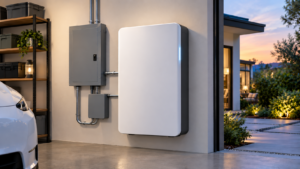
Siting governs where the battery can be placed relative to living space, exits and other equipment, with required clearances and separation. Electrical protection covers conductor sizing, overcurrent protection, disconnects and labelling. Inspection is the check that what was built matches what was permitted. None of these is optional, and skipping any of them is what creates risk. Solari Storage permits and inspects every California installation.
- Code-compliant siting with required clearances and separation from living space
- Correct conductor sizing and overcurrent protection
- Accessible, clearly labelled disconnects for emergency responders
- Manufacturer-specified mounting and ventilation
- Building permit and electrical inspection by the local authority
What Battery Chemistry Is Used in Home Storage?
Modern residential batteries generally use lithium iron phosphate chemistry, which is notable for its thermal stability compared with earlier lithium formulations used in consumer electronics and some vehicles.
This distinction matters because a great deal of public anxiety about battery safety comes from incidents involving different chemistries in very different applications. The comparison is not a close one. Alongside chemistry, home systems include battery management electronics that monitor cell temperature and voltage continuously and shut the system down if either moves outside safe bounds. Both systems we install carry this protection as standard, as set out on our Tesla Powerwall 3 page.
Where Can a Battery Be Installed in a California Home?
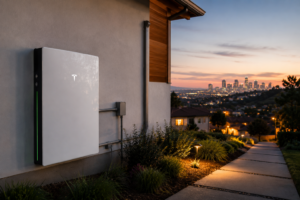
Placement is governed by fire and building code, and the permitted locations depend on the specific product and the configuration. Garages and exterior walls are common; interior locations within living space are more restricted, and required clearances apply in every case.
Because siting is a code question rather than a preference, it is settled during design and reflected in the permit drawings — not decided on installation day. National fire and electrical standards underpin much of what California’s requirements are built on, and the permitted locations for your specific system are recorded in the permit drawings.
What Are the Actual Risks?
The meaningful risks in residential storage are installation risks rather than product risks: undersized conductors, inadequate overcurrent protection, poor siting that violates clearance requirements, unlabelled disconnects that leave emergency responders unable to isolate the system, and unpermitted work that no inspector has ever verified.
Every one of those is a workmanship failure. This is why permitting and inspection are not bureaucracy — they are the mechanism by which those failures get caught. It is also why verifying that your contractor is properly licensed matters. The Contractors State License Board lets you check a licence before work begins.
Do Home Batteries Require Maintenance?
Very little. There are no fluids to change and no moving parts in the battery itself. Systems monitor their own state continuously and report faults through their monitoring platform.
Sensible practice is to keep the area around the battery clear, avoid stacking storage against it in a garage, and pay attention to any alerts the monitoring app raises. Beyond that, residential storage is close to maintenance-free, which is one of its practical advantages over a standby generator. Solari Storage sets up monitoring at handover so you can see the system’s state at any time.
How Does Battery Safety Compare With a Backup Generator?
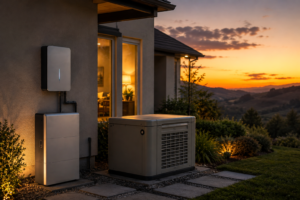
Home batteries and backup generators carry different risk profiles rather than one being universally safer. A generator involves stored fuel, combustion and exhaust, which is why carbon monoxide is a serious hazard associated with improper generator use during outages, and why ventilation and placement requirements exist.
A battery has no fuel, no combustion and no exhaust, and can be installed indoors within code limits. Its risks are electrical and thermal rather than atmospheric. For most California households, the fact that a battery is silent, produces no exhaust and requires no fuel handling during a multi-day shutoff is a meaningful practical safety advantage. If you are weighing configurations, our Powerwall 3 versus Lunar Energy comparison covers how the two systems differ.
What Should You Ask an Installer About Safety?
Five questions separate a thorough installer from a careless one, and all five have straightforward answers that a competent contractor will give without hesitation.
Ask whether the work will be permitted and inspected, and treat any hedging as decisive. Ask where the battery will be sited and what clearances that location requires. Ask how the disconnects will be labelled for emergency responders. Ask whether the service panel needs upgrading and how that was determined. And ask for the contractor’s licence number so you can verify it yourself before signing anything.
None of these is an unusual request and none should cause friction. An installer who is vague about permitting, cannot explain the siting rules for the product they are selling, or is reluctant to give a licence number is telling you something useful about how the rest of the job will go.
- Will the installation be permitted and inspected by the local authority?
- Where will the battery be sited, and what clearances does that require?
- How will disconnects be labelled for emergency responders?
- Does the service panel need upgrading, and how was that determined?
- What is the contractor licence number, so it can be verified independently?
Frequently Asked Questions
Can a home battery catch fire?
Any electrical equipment carries some risk, but modern California home batteries use thermally stable lithium iron phosphate chemistry with continuous battery management monitoring, and the state’s siting and fire code requirements are designed around exactly this concern. Properly permitted and inspected installations have a strong safety record.
Is it safe to install a battery in an attached garage?
Garages are a common and permitted location for home battery storage in California, subject to clearance, separation and mounting requirements that vary by product and configuration. The permitted locations for your specific system are determined at design stage and recorded in the permit.
What happens if the battery overheats?
If a home battery overheats, the battery management system monitors cell temperature continuously and shuts the system down if it moves outside safe operating bounds. This protection is built into the product rather than added by the installer.
Do I need a special insurance policy?
Most California homeowners find their existing policy covers a permitted, professionally installed battery, but it is worth notifying your insurer of the addition. Unpermitted electrical work is where insurance problems typically arise, which is a further reason to have the work permitted and inspected.
How do firefighters know a battery is present?
California code requires clear labelling and accessible disconnects so firefighters and other emergency responders can identify and isolate a home battery. This is one of the specific items an electrical inspector verifies, and it is why unlabelled unpermitted installations are genuinely hazardous.
Need help now? Call Solari Storage on (916) 507-1626 or send us a recent utility bill and we will come back with real numbers for your house.
Key Takeaways
- Correct siting, correct electrical protection and code inspection account for almost all of battery installation safety.
- Modern home batteries use thermally stable lithium iron phosphate chemistry with continuous battery management monitoring.
- California governs residential storage under building, fire and electrical code simultaneously.
- The real risks are workmanship failures — undersized conductors, poor siting, unlabelled disconnects, unpermitted work.
- Home batteries are close to maintenance-free, with no fluids, moving parts or fuel handling.
- Unlike generators, batteries produce no exhaust and carry no carbon monoxide risk during long outages.
- Ask Solari Storage any safety question.