| Quick Answer: There is no single best one, because the right battery depends on what you need to keep running and for how long. For a Public Safety Power Shutoff, the two numbers that matter most are continuous output, which determines what can run at once, and usable capacity, which determines how long it lasts. Solari Storage works with four platforms rather than one, and sizes from your actual usage so the system matches your outage, not a brochure. |
Most people start looking at batteries the day after an outage, not before one. A Public Safety Power Shutoff notice arrives, or the power goes out for two days, and somewhere in that window comes the discovery that solar panels shut down with the grid. That surprise is the real starting point for this decision, and it deserves a better answer than a single product recommendation. What follows is how to think about backup properly, and why the honest answer to the question in the title is that it depends on your house.
Why Does Your Solar Shut Off During a Power Outage?
Because a grid-tied solar system is required to disconnect when the grid goes down. This is a safety rule, not a fault in your equipment. If your panels kept pushing power onto the lines during an outage, they would put line workers repairing those lines at risk. So the inverter senses the outage and shuts down.
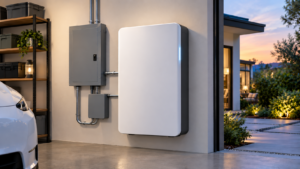
The consequence catches almost everyone. A house with a fully functioning solar array sits dark during a daytime outage, with the sun shining on panels that are producing nothing. A battery is what changes that, because it allows the system to form its own isolated island, safely disconnected from the grid, and keep your home running from stored power and in many cases from your panels as well.
What Is a PSPS and How Long Do They Last?
A Public Safety Power Shutoff is a deliberate de-energization. When wind, heat, and dry conditions combine to create severe wildfire risk, utilities proactively cut power to specific lines rather than risk their infrastructure starting a fire. The CPUC maintains public information and event data on the practice, including a dashboard that lets you check whether a specific address has been affected in past events.
Duration is the planning problem. A PSPS is not a brief flicker. Events can run from a few hours to several days, because power is restored only after conditions ease and crews have physically inspected the lines. That inspection requirement is why these outages last longer than ordinary faults, and it is why sizing for a PSPS is a different exercise from sizing for a storm outage.
Which Battery Specification Actually Matters in an Outage?
Two, and they answer different questions. Continuous output, measured in kilowatts, determines how much can run at the same moment. Usable capacity, measured in kilowatt-hours, determines how long that can continue. People tend to focus on capacity and overlook output, which is how households end up with a battery that lasts a long time but cannot start the air conditioning.
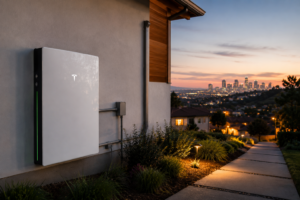
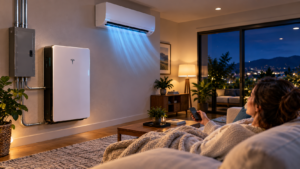
Output is what decides whether you get whole-home backup or have to choose which circuits stay live. The Tesla Powerwall 3 publishes 11.5 kW continuous, the highest of the four platforms we work with, which is what allows it to carry heavier household loads at once. Capacity is what decides whether you make it through a multi-day event, and that is where modular systems earn their place, because they can be sized to your real consumption rather than rounded up to a fixed block.
How Long Will a Battery Actually Last During a Shutoff?
Longer than most people assume, provided you have solar and the sun is out. This is the point that gets lost in runtime estimates. During a multi-day outage, your panels recharge the battery each day, so the system is not simply draining from full to empty. A house running essentials during a daylight-heavy outage can often cycle indefinitely rather than counting down.
Without solar, or during heavy smoke and cloud, the arithmetic is stricter. Runtime becomes capacity divided by your load, and your load depends entirely on what you choose to keep running. A refrigerator, lighting, internet, and device charging make a modest draw that stretches a long way. Central air conditioning is a different order of demand and will shorten a battery’s runtime dramatically. Any runtime figure that does not state its assumptions is a marketing number rather than an engineering one.
Should You Back Up the Whole House or Just Essential Circuits?
This is the decision most worth thinking about before you shop, because it drives both the size and the cost of the system. Whole-home backup keeps everything live and requires enough output to handle whatever you switch on. Essential-circuit backup routes a chosen subset through a dedicated panel, which is less expensive and stretches capacity considerably further.
Neither is automatically right. A household with medical equipment, a well pump, or someone working from home has different requirements from one that mainly wants the fridge and the lights. Some platforms handle this more granularly than others: the Lunar System includes load control that lets you decide what stays powered during an outage rather than treating the house as a single circuit, which is useful when you want to stretch a multi-day event.
Is a Battery Better Than a Generator for PSPS Backup?
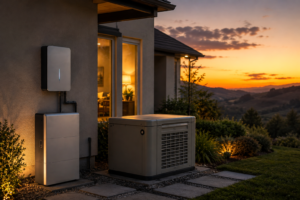
They solve the problem differently and the honest comparison depends on your priorities. A generator needs fuel, which is exactly what becomes hard to obtain during a widespread event, and it needs starting and maintaining. It also does nothing for your electricity bill for the rest of the year.
A battery switches over automatically, runs silently, needs no fuel, recharges from your panels, and earns its keep the other 360 days by letting you use your own solar during expensive evening hours instead of buying power back from the utility. The trade-off is capacity: a generator with fuel can run far longer than a battery without sun. For most California homes with existing solar, the battery is the better fit, though we will tell you if your situation points the other way.
Frequently Asked Questions
Will my solar panels charge the battery during a PSPS?
In most properly configured systems, yes. Once the battery forms an isolated island for your home, your panels can continue producing and recharging it during daylight. This is what allows a well-sized system to carry a household through a multi-day event rather than counting down from full.
How do I know if my address is in a PSPS-prone area?
The CPUC maintains a public dashboard that lets you look up whether a specific address has been affected by past PSPS events. Your utility also publishes information about high fire threat districts within its territory. Past frequency is a reasonable guide to future risk.
Can a battery run central air conditioning during an outage?
It depends on the battery’s continuous output and how the system is configured. Air conditioning is one of the heaviest loads in a typical home, so this is a question of kilowatts rather than kilowatt-hours. It also shortens runtime substantially, which is why load priorities should be decided during design rather than discovered during an outage.
How quickly does a battery take over when the power goes out?
Switchover is fast enough that most households notice little or nothing beyond a brief interruption. The exact behavior depends on the platform and configuration. What matters more for planning is what the system can carry once it has taken over, and for how long.
How do I work out what size I need for outages?
Start by deciding what must stay running and for how long, then size to that rather than to a general recommendation. Send us a recent utility bill and tell us your backup priorities. We read your real usage and specify from there, across four platforms rather than pushing one.
Ready for a straight answer? Send Solari Storage a recent utility bill and we will tell you whether storage makes sense for your home, including if the numbers say do not buy. Request your free assessment.
Key Takeaways
- Grid-tied solar shuts down during an outage for line worker safety, so panels alone provide no backup without storage.
- A Public Safety Power Shutoff can last from hours to several days, because power returns only after conditions ease and crews inspect the lines.
- Continuous output determines what can run at once and usable capacity determines how long, and output is the specification most often overlooked.
- With solar, a battery recharges each day during an outage, which changes the calculation from a countdown to a daily cycle.
- Deciding between whole-home and essential-circuit backup before shopping drives both system size and cost.
- There is no single best battery for outages, which is why we work with four platforms and size from your actual usage and backup priorities.