| Quick Answer: Modern lithium-ion home batteries are warrantied for 10 to 12 years and typically remain useful beyond the warranty period — they fade gradually rather than failing outright. Capacity declines slowly with age and cycling, and the pace depends on temperature, depth of discharge and how hard the battery works daily. In California, a battery cycling through the evening peak every day will generally repay its cost well inside its warrantied life. |
Lifespan is one of the most reasonable questions a homeowner can ask about battery storage, and one of the worst-answered online. Most pages either quote a single mythical number or bury the real answer under chemistry jargon. The truth is simpler: home batteries age the way phone batteries do — gradually losing a fraction of capacity over years — except they are engineered, warrantied and managed for a far longer working life.
Here is what actually determines how long a home battery lasts in a California home, what the warranties on today’s major platforms promise, and how usage patterns change the math.
What “Battery Degradation” Actually Means
A home battery does not have an expiry date. What it has is a slow decline in usable capacity: a battery that stored 13.5 kWh when new might hold somewhat less after a decade of daily use. Researchers at the National Renewable Energy Laboratory study exactly this process — how temperature history, charge and discharge rates, and cycling patterns drive lithium-ion aging — and the consistent finding is that degradation is gradual and manageable, not a cliff.
In practical terms, an aging battery simply covers slightly fewer evening hours than it did when new. It keeps shifting energy, keeps providing backup, and keeps saving money — with a bit less headroom each year. That is why warranties in this industry are written around retained capacity over time rather than a simple pass/fail date.
Battery Warranties in 2026: What the Major Platforms Promise
Warranty terms are the clearest published signal of how long manufacturers expect their hardware to perform. Across the four platforms Solari Storage works with, warranties run 10 to 12 years:
- Tesla publishes a 10-year warranty on the Powerwall 3.
- FranklinWH states a 12-year warranty on the aPower — the longest stated warranty of the four.
- Lunar Energy and SolarEdge each publish multi-year warranties on their platforms; exact terms are confirmed as part of any quote.
Two things are worth understanding about these warranties. First, they guarantee performance, not just survival — the battery must keep delivering a stated share of its capacity through the term. Second, a warranty is a floor, not a ceiling: hardware engineered to guarantee a decade of daily cycling is generally built to keep operating past it. Warranty length is also a fair tiebreaker between otherwise similar platforms, which is one reason the FranklinWH aPower stands out for homeowners planning to stay in their homes long-term.
How California Conditions Affect Battery Life
Heat is the biggest environmental factor in lithium-ion aging — sustained high temperatures accelerate the chemical processes that consume capacity. That matters in California’s inland valleys and deserts, and it is why installation decisions that seem cosmetic are actually lifespan decisions.
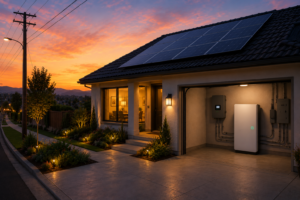
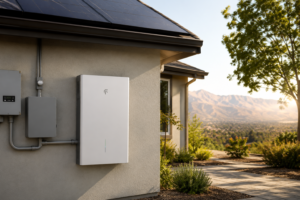
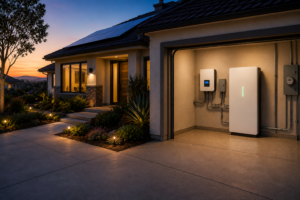
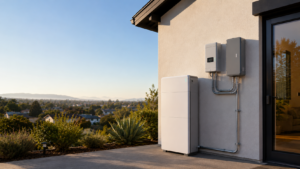
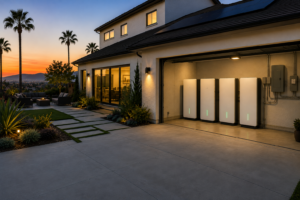
A battery mounted in a garage or on a shaded north-facing wall lives an easier life than one baking on a west-facing exterior wall in Fresno. Modern platforms manage their own thermal environment, but placement still matters, and it is one of the details a competent system design gets right the first time. Siting, along with permitting and utility interconnection, is handled within Solari Storage’s five-stage process, with installation carried out by licensed contractors.
Daily Cycling vs Backup-Only: How Usage Shapes Lifespan
How hard a battery works is the other half of the aging equation. In California, most batteries earn their keep by cycling daily — charging on midday solar and discharging through the 4–9 PM peak. That is roughly one full cycle per day, and it is precisely the duty modern home batteries are designed and warrantied for.
A battery kept mostly as backup insurance, cycling only during outages and Public Safety Power Shutoffs, ages more gently still. Between the two, the daily-cycling battery works harder but also pays for itself — every cycle through the evening peak is money not spent on 35-to-62-cent grid power. Aging is not something to minimize at all costs; it is the normal wear of an asset doing its job, and the financial return typically arrives well inside the warrantied period.
Getting the Most Life Out of a Home Battery
The good news: almost everything that extends battery life is done for you. Modern platforms manage their own charge windows, thermal behavior and depth of discharge automatically — the software’s job is to maximize value per cycle while protecting the cells. The homeowner-controllable factors reduce to a short list:
- Right-size the system. A battery sized to your real evening load cycles comfortably; a badly undersized one runs flat-out every day.
- Site it sensibly. Shade, ventilation and moderate temperatures all slow aging.
- Keep it connected and updated. Platform software improvements routinely refine charge management over the battery’s life.
Sizing is the one that matters most — and it is exactly why a real design starts from your utility bill and your actual evening consumption rather than a one-size-fits-all block of capacity.
Frequently Asked Questions
How long does a home battery last?
Warranties on the major platforms run 10 to 12 years, and batteries typically remain useful beyond that — capacity fades gradually rather than the unit failing on a date.
Do home batteries lose capacity over time?
Yes, gradually. Aging is driven by temperature, cycling and depth of discharge, and warranties are written around retained capacity through the term — the battery must keep performing, not merely survive.
Does California heat shorten battery life?
Sustained heat accelerates lithium-ion aging, which is why placement — a garage or shaded wall over a sun-baked exterior — is a genuine lifespan decision. Modern platforms also actively manage their own thermal environment.
Does using the battery every day wear it out faster?
Daily cycling is exactly the duty these batteries are designed and warrantied for. A daily-cycling battery ages faster than a backup-only one, but it is also the one paying for itself through every evening peak.
Which battery has the longest warranty?
Among the platforms Solari Storage works with, FranklinWH states a 12-year warranty on the aPower; Tesla publishes 10 years on the Powerwall 3.
Ready for a straight answer? Send Solari Storage a recent utility bill and find out exactly what a battery would do for your home — including if the numbers say don’t buy. Contact Solari Storage for a free assessment.
Key Takeaways
- Home batteries are warrantied for 10–12 years and fade gradually — they lose capacity slowly rather than failing on a date.
- FranklinWH states a 12-year warranty on the aPower, the longest of the four platforms; Tesla publishes 10 years on Powerwall 3.
- Heat is the biggest environmental aging factor, making placement and system design genuine lifespan decisions in California.
- Daily cycling through the 4–9 PM peak is the designed duty — and the usage pattern that pays the battery off within its warrantied life.
- Right-sizing from your real utility bill is the single biggest homeowner-controllable factor in battery longevity.